

Havana, Cuba's Capital at Street Level: The Malecón, Casas Particulares and Afro-Cuban Rhythms
14 août 2026 à 14h06 · GotaNomad · Mis à jour le 16 août 2026
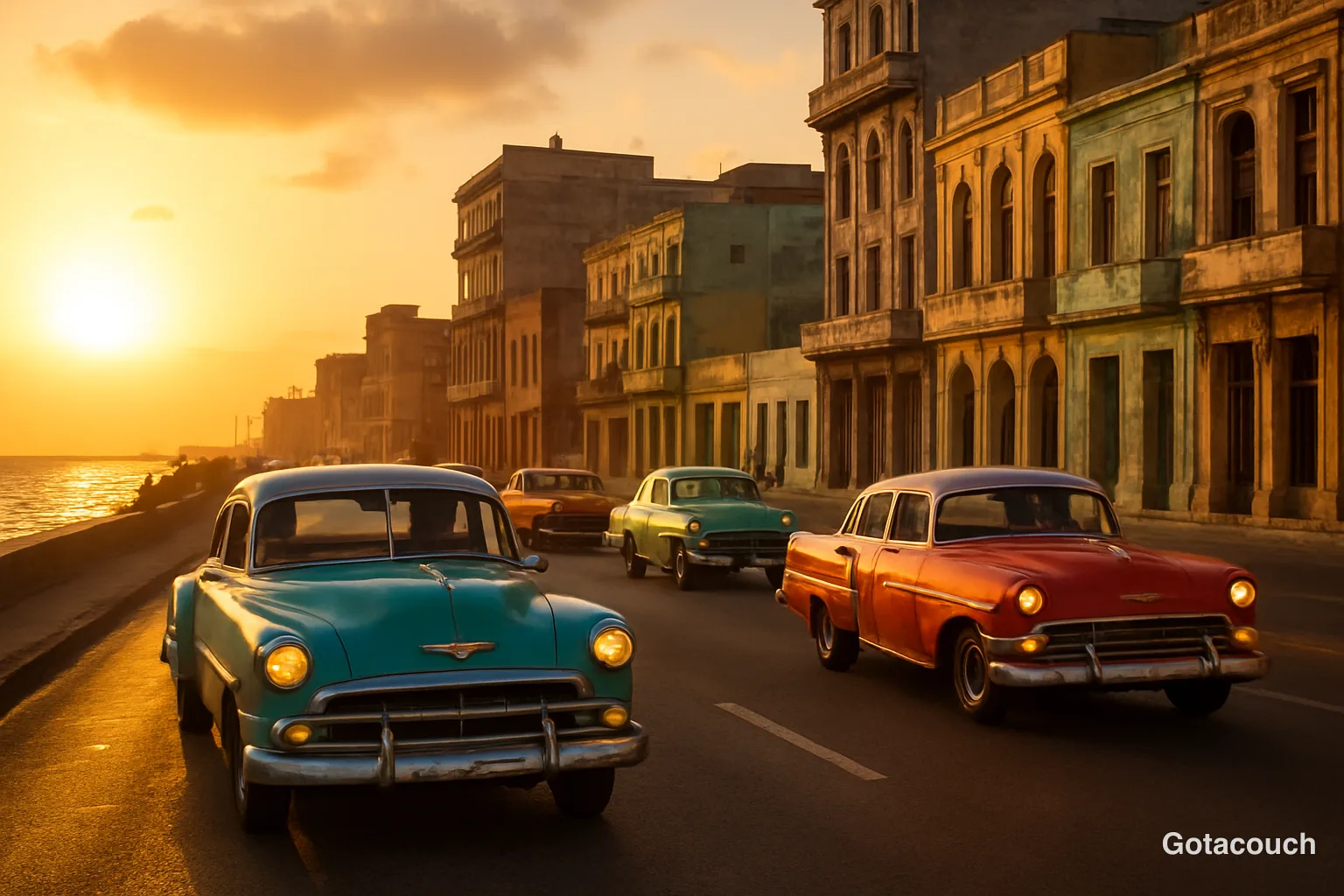
A Capital Born of Two Foundations
The history of Havana begins in an almost twofold way. The city was first founded in 1514 by Pánfilo de Narváez, on the orders of Diego Velázquez, before being officially established in 1519 at its current location, on the bay that would go on to make its fortune. From the 17th century onward, the city became a major shipbuilding center for the entire Caribbean, a strategic position that explains the strength of its fortifications. This exceptional heritage was recognized in 1984, when the old town and its defensive system were inscribed as a UNESCO World Heritage Site. In November 2019, Havana celebrated its half-millennium, a five-hundredth anniversary marked by restoration work and a palpable civic pride throughout the streets of Habana Vieja.
The Neighborhoods That Tell Havana's Story
It's impossible to reduce Havana to a single face. Habana Vieja, the historic heart of the city and a listed site, concentrates most of the tourist flow with its restored façades, cobblestone squares and baroque cathedral. Just a few streets away, Centro Habana reveals a rawer side of the city: it's the neighborhood where the poorest families live, home to a handful of excellent casas particulares and direct access to the Malecón. Further west, El Vedado, once a resort area, has become the capital's commercial and cultural center, with its avenues laid out at right angles and iconic hotels such as the Nacional and the Habana Libre. Miramar, lastly, spreads out its villas and embassies in a more residential atmosphere.
Beyond this well-known triangle of guidebooks, Havana includes numerous outlying municipalities that foreign visitors almost entirely overlook: Guanabacoa, Marianao, El Cerro, Arroyo Naranjo and La Lisa. One neighborhood deserves particular attention: San Isidro, which is gradually emerging as the city's new artistic territory, with independent galleries and a creative scene still taking shape.
Staying and Living with Locals: The Casa Particular Spirit
This is undoubtedly the best gateway into everyday life in Havana. Casas particulares, rooms rented directly from local households, offer a level of immersion that neither hotels nor organized tours can match: hosts happily share their favorite spots, family stories and sometimes even their table. The options are plentiful — more than 3,300 rooms are available for rent with locals in the capital alone — and it's precisely in this spirit that GotaCouch invites travelers to explore: staying with someone is already the beginning of understanding a city.
Music, Santería and Afro-Cuban Culture
Afro-Cuban culture runs deep through Havana's identity. Santería, a syncretic religion born from the encounter between Yoruba beliefs and Catholicism, permeates the spiritual life of many residents and manifests itself through ceremonies combining chants, dance and offerings. Musically, guaguancó, a style of rumba born in the streets of the city, illustrates this richness and retains an important ritual role. The neighborhood of Cayo Hueso, around the Callejón de Hamel, is its most visible showcase, with colorful murals and drumming that echoes through the streets on certain afternoons. It's worth being honest, though: this spot is by no means a well-kept secret — it appears in every guidebook and every Havana resident knows it. Its appeal remains genuine, but nowadays it's experienced alongside plenty of other visitors rather than as an exclusive discovery.
Gastronomy: Paladares, Markets and Local Flavors
Havana's culinary scene has evolved noticeably in recent years thanks to the rise of paladares, privately run restaurants that now offer more ambitious menus, featuring imported wines — often Spanish or Chilean — as well as Cuban wines like Soroa or San Cristóbal. The growth of urban farming, encouraged by the authorities, has begun to supply these establishments, even though distribution networks remain limited. To see Havana residents in their natural element, head to the Mercado de Cuatro Caminos, a historic agricultural market where you'll find fruits, vegetables, meats and legumes. Many locals view it as a place steeped in memory, a landmark passed down from generation to generation, and one that remains largely off the beaten tourist path.
When to Visit Havana
The best time to visit is between December and April, during the dry season, when the climate is most pleasant. Peak tourist season runs from December to January and again in July and August, bringing larger crowds and higher prices. From May to October, the rainy season sets in, marked by frequent tropical downpours, and it's worth keeping in mind that the period from June to October also corresponds to hurricane season, with a risk of storms to watch for. On the plus side, hotels are cheaper during this time, and Havana welcomes visitors year-round, each season offering its own distinct character.
How Long to Stay
Two days are enough to grasp the essentials of the city and its different neighborhoods before heading on to other parts of the island. To combine Havana, Centro Habana and a trip to Viñales, plan for two to three days instead. For a more complete stay, including the Viñales valley and its tobacco plantation landscapes, it's better to allow around ten days. In practice, three to four full days let you properly experience Havana itself — its neighborhoods, monuments, and an evening of live music — while a week to ten days allows you to combine the capital with Viñales and a beach extension, whether in Varadero or at the Playas del Este.
Around Havana: Beaches, Tobacco and the Open Sea
A short distance from the capital lie the Playas del Este, perfect for a day of fine sand and turquoise water. Further west, the Viñales valley invites you to wander among vast tobacco plantations, set against a backdrop of mogotes that stands in stark contrast to the bustle of the city. Lastly, Varadero, the island's iconic beach resort, can be visited on a day trip or added as an extension to end the journey on a more relaxed note.
Practical Tips for Planning Your Trip
An important change came into effect in 2024: since May 6th, international tourists must obtain an e-visa before departure, replacing the former tourist card. The application is made online through the official portal, at a fixed cost of 22 euros, payable by bank transfer or certified check.
As for currency exchange, the situation remains fluid: in early 2024, the official rate stood at around 120 CUP to the euro at the bank, while the informal market offered significantly higher rates, ranging from 250 to 350 CUP depending on the source. Since these gaps shift quickly, it's best to check just before departure and bring cash, preferably in euros, as foreign bank cards remain of limited use on the island. It's also worth being upfront that Cuba is going through a period of economic and energy crisis, with possible power outages: a factor best factored calmly into your trip planning rather than ignored.
A Destination in Transition
Cuban tourism is going through a period of reconfiguration. After the historic peak of 2018, with nearly 4.7 million international visitors, the sector has struggled to regain momentum: in 2024, Cuba welcomed around 2.2 million foreign visitors, one of the lowest figures in recent years outside the pandemic period. Before the health crisis, tourism accounted for roughly 2.6% of national GDP. There is, however, no separate official statistic specifically for the city of Havana: the available figures cover Cuba as a whole. The capital, home to more than two million residents, nonetheless remains the essential point of entry for the vast majority of travelers, and it is precisely within this context of transformation that a genuine encounter with its people takes on its full meaning.
Comments
Log in to leave a comment.
No comments yet.