

Rio de Janeiro: Between Legendary Beaches, Lively Favelas and Samba Rhythms, the Carioca Soul Under the Open Sky
14 août 2026 à 09h12 · GotaNomad · Mis à jour le 16 août 2026
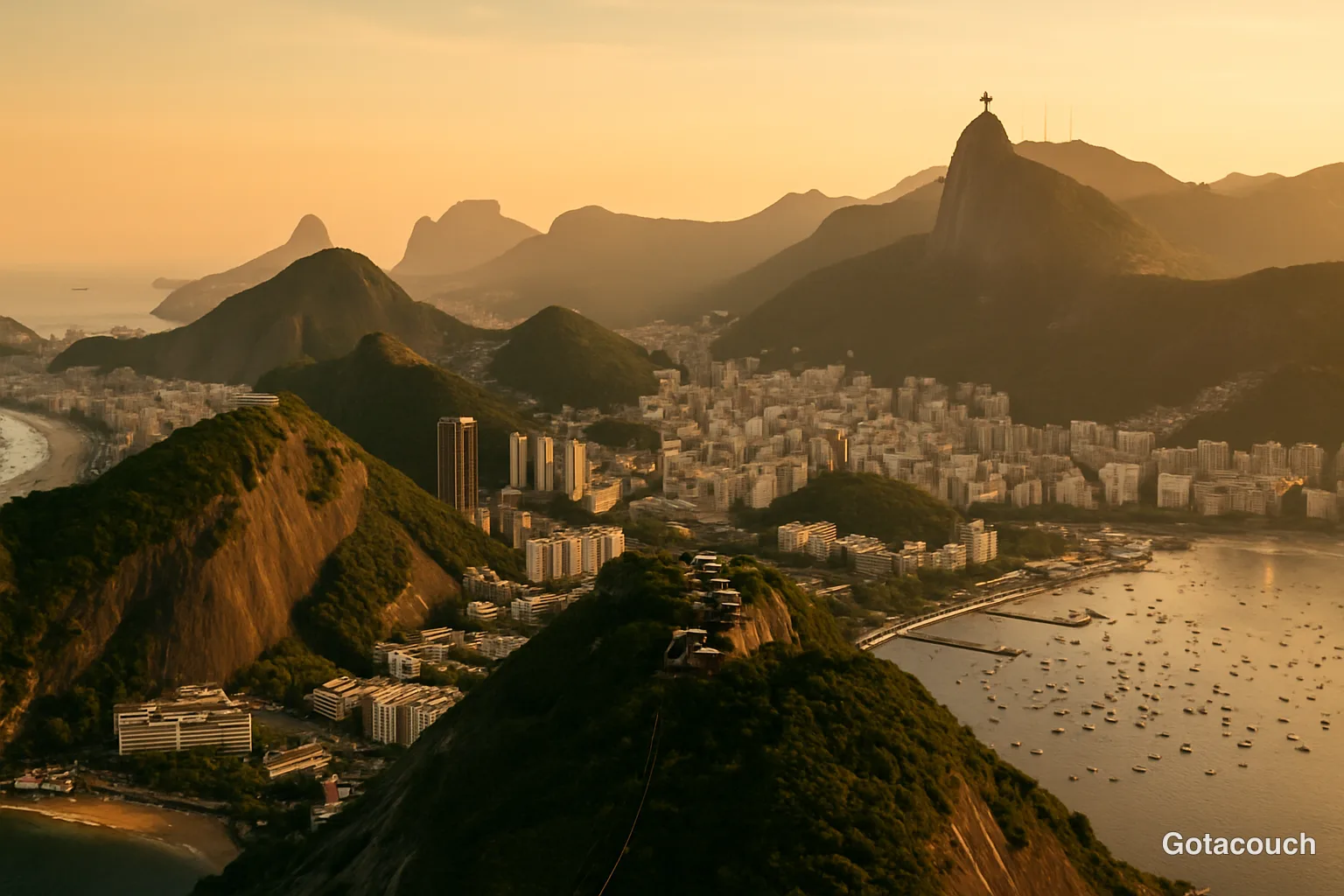
A city born from a misunderstanding and a battle
There is something delightfully carioca about the very origin of the name Rio de Janeiro. In January 1502, Portuguese navigators entered Guanabara Bay and, convinced they had discovered the mouth of a river, named it "Rio de Janeiro" — the January river. A geographical error that would persist through the centuries without ever being corrected. The city itself was born later, on March 1, 1565, when Estácio de Sá put an end, after two years of fighting, to the French presence in the bay. It was then named São Sebastião do Rio de Janeiro, in tribute to the patron saint of the King of Portugal.
Its destiny truly changed course in 1808, when the Portuguese court, fleeing Napoleon's armies, settled there with all its trappings. Palaces, a botanical garden, a museum of fine arts, faculties of law and medicine: Rio transformed into a capital worthy of the name, the most populous in Brazil until 1950, and it remained the national capital until the transfer to Brasília in 1960. From this turbulent history, made of royal splendor and slavery, emerged a fragmented city, where different worlds coexist without always mixing — but one that retains intact its reputation as the Cidade Maravilhosa, the marvelous city.
Neighborhoods with radically different faces
Understanding Rio means first understanding its social geography. The South Zone concentrates the best-known and most upscale neighborhoods: Copacabana, Ipanema, Leme, Leblon, Urca, Flamengo, Botafogo and Glória. This is where most tourists and Rio's middle and upper classes live, amid beaches, terraces and Art Deco buildings.
Centro, meanwhile, lives at the rhythm of office hours: lively at midday and on weekdays for lunch, shopping or admiring historic monuments, it empties out in the evening and on weekends — times when it's better to avoid strolling there. On the hillside just above, Santa Teresa offers a completely different face: cobblestone streets, slightly faded 19th-century colonial mansions, artists' workshops and the famous yellow tram, the Bonde, winding between houses in a resolutely bohemian atmosphere.
Not far from there, Lapa embodies Rio's festive soul. By day, visitors admire the historic architecture and the striking modern-design metropolitan cathedral; by night, clubs like Scenarium, Carioca da Gema or Democrático host samba bands whose reputation extends well beyond Brazil's borders. As for the North Zone, apart from the legendary Maracanã stadium, it remains little visited by tourists and unsafe to explore without local guidance.
The must-sees, from Christ the Redeemer to the Escadaria Selarón
It's impossible to talk about Rio without mentioning Christ the Redeemer, perched at 709 meters atop Corcovado. The statue, 38 meters tall including its pedestal and inaugurated in 1931, is recognized by the Guinness Book of Records as the largest representation of Jesus Christ in the world; in 2007 it joined the very exclusive circle of the New Seven Wonders of the World.
Facing it, on the other side of the bay, Sugarloaf Mountain rises to 396 meters and offers a 360-degree panorama over the city, the ocean and the surrounding mountains — accessible by cable car or, for the more athletic accompanied by a guide, on foot via hiking trails. Between Lapa and Santa Teresa, the Escadaria Selarón is well worth the detour: this staircase, covered by Chilean artist Jorge Selarón with more than 2,000 ceramic tiles from around the world, has become a genuine photographic pilgrimage site.
And then there are the beaches, Copacabana and Ipanema, celebrated the world over in song. Legend has it that The Girl from Ipanema was inspired by Helô Pinheiro, a teenager who walked past the Veloso bar — now renamed Garota de Ipanema — every day on her way to the sand, under the watchful eye of composer Tom Jobim and poet Vinicius de Moraes, seated there.
Meeting the real Rio, beyond the postcards
This is the whole spirit of travel, GotaCouch-style: seeking out the city behind its monuments. Favelas are an integral part of the carioca landscape — there are more than 800 of them, estimated to house over a quarter of the city's population. Rocinha, the largest, is thought to have tens of thousands of residents. Visiting them requires an ethical approach: obtaining residents' consent before taking any photos, avoiding intrusive behavior, and favoring a local guide and initiatives like the "Favela Painting" art movement, which showcases the talent of young creators from the neighborhood.
To feel the pulse of daily carioca life, head to the markets: the Feira Hippie in Ipanema, which brings the famous beach to life every Sunday, or the Copacabana fish market, less known to tourists and still authentic. Signing up for a samba or capoeira class, sharing a meal with locals, chatting with a local entrepreneur: all ways to leave with far more than a collection of photos.
Samba, bossa nova, funk: the soundtrack of a city
Samba was not born in the salons of Copacabana but in the secret circles formed on Sundays by enslaved people from the Congo and Angola to sing and play drums. This samba de roda, recognized by UNESCO as an intangible cultural heritage of humanity in 2008, migrated with freed Black communities after the abolition of slavery in 1888 to the hills that would become Rio's favelas.
In the late 1950s, in the prosperous seaside communities of the South Zone, Antônio Carlos Jobim and João Gilberto fused samba with cool jazz to invent bossa nova, which was exported worldwide. Later, in the favelas, DJs blended American soul, R&B and funk at open-air gatherings, giving birth to funk carioca — a music scene still in full swing today.
Carnival, a collective explosion
Nothing embodies Rio's energy better than its Carnival, a blend of the Catholic Lenten traditions brought by European settlers and the Afro-descendant influences carried by samba. The samba schools, which supply dancers, costumes and floats for the parades at the Sambódromo, are among the most extravagant in the country. According to data from Rio's city hall, the 2024 edition brought together around 7 million people across all the festivities — parades, street carnival and popular balls combined — generating an estimated economic impact of 5 billion reais. The State Tourism Secretariat announced an even larger turnout for 2025. It's an experience worth living at least once, accepting the heat, the crowds and the high prices in exchange for a truly incomparable atmosphere.
Gastronomy: a blend to savor
Carioca cuisine also tells the story of Brazilian cultural blending: African, indigenous and Portuguese influences combine to turn simple ingredients into powerful flavors. The national dish, feijoada, a stew of black beans and meats served with rice, collard greens, farofa and orange, is an essential experience, as are the must-try street foods: pão de queijo, coxinha, pastel or acarajé, found notably at the Feira da Glória.
For a more local immersion, head to the Municipal Market RJ – CADEG, a lively bazaar where you'll find fresh produce, wines, flowers and plants, especially popular on Saturdays. A great way to end a morning stroll before heading to the beach for lunchtime.
Venturing further: around Rio
Rio also lends itself wonderfully to day trips. About an hour and a half's drive away, Petrópolis, the former summer retreat of the imperial family, preserves the Crystal Palace, the Imperial Museum and the tomb of Dom Pedro II. Further away, four hours by road, Paraty charms visitors with its colonial architecture, a legacy of the era when the port exported sugar and gold from Minas Gerais; staying overnight allows you to fully appreciate its charm.
Nature lovers will choose Ilha Grande, with coves like Enseada das Palmas or Lagoa Azul, or the Búzios peninsula, a former fishing village turned chic seaside resort where Rua das Pedras is lined with shops and restaurants. Finally, a simple ferry ride is enough to reach Niterói, on the other side of Guanabara Bay, and its contemporary art museum.
When to go and how long to stay
Rio's tropical maritime climate features a dry season, from May to October, and a rainy season, from December to March. The most pleasant period remains the Brazilian autumn and winter: temperatures stabilize around 25°C, rainfall becomes rarer and humidity drops noticeably. Carnival, held between February and March depending on the year, or New Year's Eve on Copacabana, are nonetheless worth experiencing despite the heat and crowds.
As for length of stay, three days are enough for a first overview without rushing, but four to five days allow for a more relaxed exploration of the city. To combine Rio with Paraty, Ilha Grande or Petrópolis, it's best to plan for eight to ten days.
Practical tips for a stress-free stay
- Dress discreetly and leave jewelry, watches and designer sunglasses at home, even on the patrolled beaches of Copacabana and Ipanema.
- Plan your route before taking the bus and favor taxis or ride-hailing apps in the evening, rather than walking along deserted streets or beaches.
- Tourist neighborhoods like Ipanema, Leblon, Copacabana or Santa Teresa remain lively and generally safe during the day thanks to increased police presence.
- Only venture into non-pacified favelas accompanied by a trusted local guide.
- The metro has elevators, sometimes out of service, and some walkways along the waterfront are wheelchair accessible.
- The official language is Brazilian Portuguese; English remains uncommon outside tourist areas.
Rio in numbers: city and state, a distinction worth keeping in mind
Beware of a common confusion: most recent official tourism statistics concern the State of Rio de Janeiro as a whole, not just the municipality. According to the State Tourism Secretariat, the state welcomed more than 1.1 million international tourists in 2023, then 1,513,235 in 2024, a 26.8% increase driven notably by Argentina, Chile and the United States, its three main source markets. The stated goal for 2025 is to reach 1.8 million foreign visitors at the state level. These impressive figures show, in any case, a destination that has lost none of its power of attraction — whether visitors come for its beaches, its mountains or, quite simply, for the warmth of its people.
Comments
Log in to leave a comment.
No comments yet.